Cart
new
Cyma forma RND synth
- Read reviews (0)
- Related accessories
- Free delivery
- Low prices guaranteed
- Satisfied or refunded
- 3-years warranty
Pre-order
contact us
Stock in store
Not available in store
INFORM ME OF ITS ENTRY IN STOCK
I want to be notified by email
Go
The brand Cyma forma
Learn more about the brand and discover the entire catalog.
The largest network of stores in France
Find all the information on our superstores and our specialized boutiques.
Contact an expert
Our musician and enthusiast tele-consultants are here to answer all your questions.
Expander
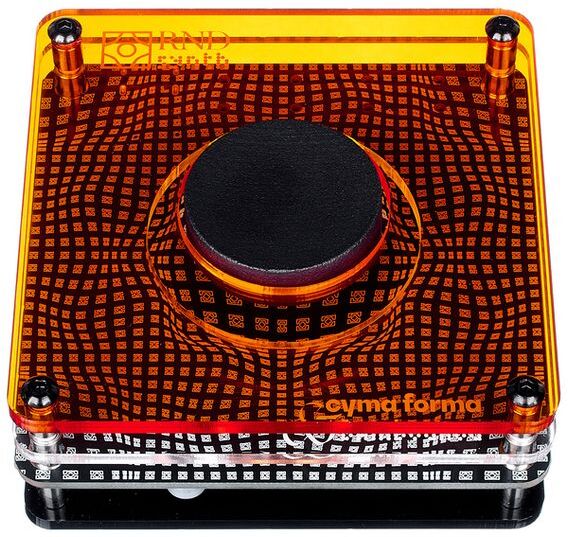
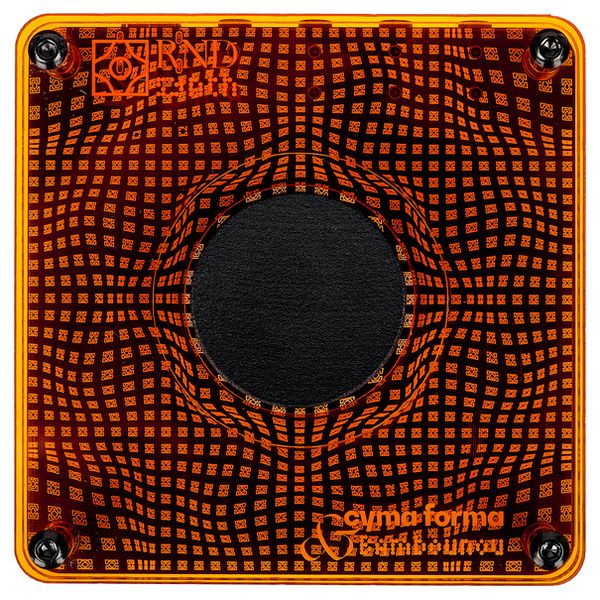
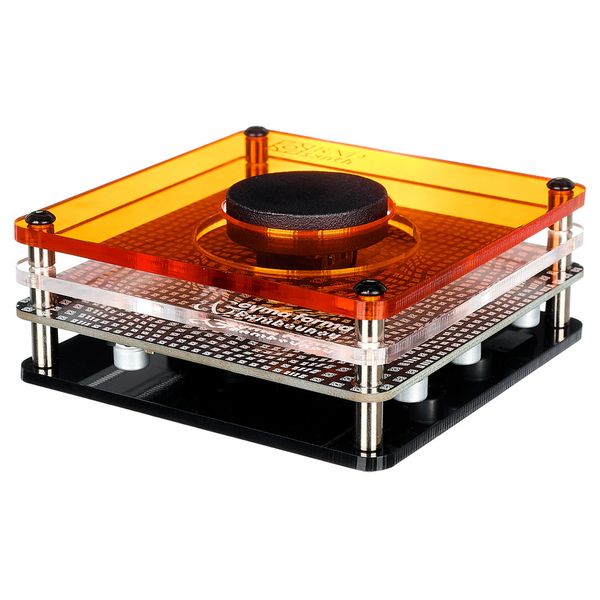
The CYMA FORMA RND is a generative digital synthesizer developed in collaboration with French artist Bambounou. Designed to create sequences, drones, and experimental textures with the press of a single button, it transforms chance into a compositional tool. With its eight synthesis engines and four independent tracks, it is aimed at electronic music producers, experimental musicians, and sound design enthusiasts who want to explore new sonic ideas.
Key Features
- Instant Random Generation: A single press of the button creates a new composition from over 4 billion possible combinations.
- 8 synthesis engines: Explore different synthesis techniques, from FM to noisy textures, acid bass, and additive sounds.
- 4 independent tracks: combine up to four instruments, each equipped with its own Euclidean sequencer, to create rhythmic and melodic structures.
- 3 creation modes: generate loops, evolving drones, or one-shot jingles.
- USB-C MIDI and audio connectivity: control the instruments from external gear, transmit MIDI sequences, and record audio tracks separately.
- RND Pixels compatibility: view compositions, edit parameters, and save your ideas from a browser-based interface.
Over 4 billion sound combinations
The CYMA FORMA RND is based on a simple principle: each press of its single button generates a new musical creation. The instrument randomly assigns values to synthesis parameters and sequences, instantly producing new combinations of sounds, rhythms, and melodies.
With 4,294,967,296 possible combinations, RND offers a vast field for experimentation. Each new generation replaces the previous one, encouraging a spontaneous approach to composition. This method is particularly useful for finding a starting point for a piece, discovering unexpected combinations, or refreshing your ideas without having to program each parameter individually.
Eight synthesis engines for varied textures
RND features eight synthesis engines: subtractive, FM, Acid, Noise, Speech, Karplus-Strong, Supersaw, and additive. Each is based on a different approach to sound creation, allowing you to explore electronic basses, percussive sounds, noisy textures, harmonic timbres, or experimental sounds.
The engines can be selected at random with each new generation. Combining them allows you to shift from a rhythmic composition to a more abstract atmosphere, or to blend multiple families of sounds within a single creation. This diversity gives the RND a special place in setups dedicated to electronic music and sound design.
Four tracks and Euclidean sequencers
The CYMA FORMA RND can run up to four instruments simultaneously. Each track has its own synthesis engine and an independent Euclidean sequencer, capable of distributing musical events according to specific rhythmic structures. The four sequences can thus be layered to build compositions with intertwining rhythms and unpredictable developments.
With 20 musical scales available, RND allows you to generate melodic lines within different harmonic frameworks. The combination of scales, synthesis engines, and sequencers gives rise to creations that maintain a musical structure while leaving plenty of room for chance.
Three creation modes and built-in reverb
RND offers three types of creation modes suited to different musical approaches. Loop mode generates repetitive sequences, useful for developing rhythmic patterns or establishing a compositional foundation. Drone mode emphasizes continuous, evolving textures, while Jingle mode produces musical phrases played only once.
A built-in reverb adds space to the generated sounds. It can, in particular, extend textures, enrich drones, or create continuity between sound events. The system is designed for immediate use, without requiring in-depth programming.
MIDI Control and Interaction with Other Instruments
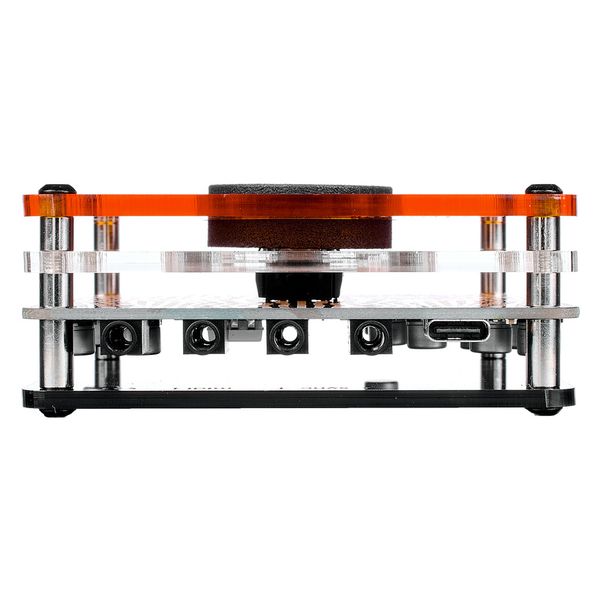
Despite its minimalist interface, the CYMA FORMA RND features USB-C and mini-jack MIDI connections, allowing it to be connected to a master keyboard, an external sequencer, or music production software. You can take control of one track while letting the other three operate generatively, or play the instruments directly using solo mode.
RND can also transmit MIDI sequences from its four tracks to other equipment. This allows you to use its rhythmic and melodic generators to control external synthesizers, trigger other sound sources, or capture the generated ideas within a production environment.
Audio Connectivity and Studio Integration
The CYMA FORMA RND features a stereo mini-jack audio output for connecting to a monitoring system, a mixing console, or an audio interface. Its USB-C port also includes a multichannel audio interface that allows you to record the four tracks separately, as well as the stereo mix with reverb. This feature makes it easy to process individual instruments during mixing in production software.
Analog and MIDI sync connections allow the RND to be integrated into a hardware or computer setup and to run its sequences in sync with other equipment. Its compact size and USB-C power supply make it easy to set up in a studio, an electronic music setup, or a live performance rig.
RND Pixels: Visualization and Editing via a Browser
The CYMA FORMA RND is compatible with RND Pixels, a visual interface accessible via a web browser. It offers 12 generative visualizations that respond to MIDI notes and the sound produced by the synthesizer. This visual dimension allows musical creations to be accompanied by dynamic animations.
RND Pixels also provides access to additional control functions for adjusting parameters and selecting synthesis engines. The interface allows you to save and share creations based on their random generation seeds. This way, you can save an interesting idea and revisit it later, rather than relying solely on the new combinations generated by the button.
Lire la suite
Technical sheet
- Type of expander Analog
- General
- Type: Generative Digital Synthesizer
- Architecture: digital synthesis with random generation
- Interface: single button
- Number of possible combinations: 4,294,967,296
- Number of tracks: up to 4 simultaneous instruments
- Polyphony: up to 4 voices per instrument, depending on the sound generated
- Number of synthesis engines: 8
- Sound generation
- Subtractive synthesis
- FM synthesis
- Acid synthesis
- Noise synthesis
- Speech Synthesis
- Karplus-Strong synthesis
- Supersaw Synthesis
- Additive Synthesis
- 20 musical scales
- 5 filter types
- Built-in reverb
- Independent MIDI control of track volume and reverb
- 3 types of creations: looping sequences, drones, and jingles
- Random generation of sound parameters and sequences
- Presets and sounds are retained between patch changes and power cycles (firmware 1.4)
- Sequencing
- 4 independent Euclidean sequencers
- Randomly generated MIDI sequences
- Control of sequencers via a keyboard or external sequencer
- Probabilities for portamento and note hold
- MIDI clock synchronization
- Analog synchronization: 2 PPQN
- Transmission of the 4 MIDI sequences to external instruments via USB-C
- MIDI
- MIDI USB-C: input and output
- MIDI input: 3.5 mm TRS mini-jack, Type A
- 4 MIDI input channels for playing instruments
- 4 MIDI output channels for generative sequences
- 9 MIDI control modes
- MIDI Channel 1: Global control (pitch, scale, patch type, volume, and reverb)
- MIDI Channels 2–5: Individual track control while maintaining other sequences
- MIDI channels 6–9: Instrument playback in solo mode
- Support for notes, velocity, pitch bend, and aftertouch
- MIDI clock reception via USB-C and TRS mini-jack
- Audio and Connectivity
- Stereo audio output: 3.5 mm TRS mini-jack
- Multichannel USB-C audio interface
- 6 USB audio channels with firmware 1.4
- USB channels 1 and 2: stereo mix with panning and reverb
- USB channels 3–6: 4 independent mono tracks without reverb
- USB sample rate: 44.1 kHz
- Analog sync input: 3.5 mm TS mini-jack
- Analog sync output: 3.5 mm TS mini-jack
- USB-C connection: power, MIDI, and multichannel audio
- Additional Features
- RND Pixels compatible
- 12 generative visualization modes
- Parameter control via a web browser
- Save and share creations using generation seeds
- Firmware updates available
- Power
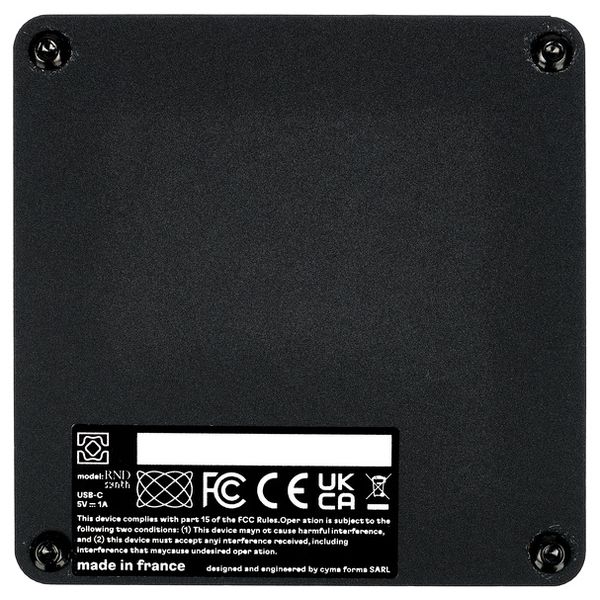
- Power: USB-C
- Voltage: 5 V DC
- Current: 1 A
More specifications
Fewer specifications
Often purchased with Expander
-

X-TONE
X2002-6M - Jack(M) 6,35 mono / Jack(M) 6,35 mono S...
21.00 € -
Gift ideas

SHURE
SM58 LCE
114.00 € -
Gift ideas

BEYERDYNAMIC
DT 770 Pro 80 Ohms
142.00 € -

X-TONE
X1026 MIDI 2 Din 5 Broches - 3m
8.00 € -
Black November

FOCAL
Listen Pro
149.00 € -
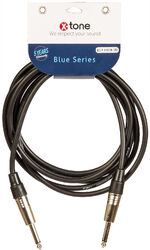
X-TONE
X1005-3M Jack (M) 6,35 / Jack (M) 6,35
10.00 € -

X-TONE
XD-410
89.00 € -

X-TONE
X2009-3M XLR(M) / Jack(M) 6,35 TRS SILVER SERIES
16.00 € -
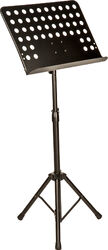
X-TONE
XH6501 Music Stand
39.00 € -
Gift ideas

X-TONE
X-HP2
79.00 € -
Gift ideas

X-TONE
X-HP1
49.00 € -
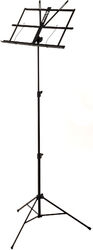
X-TONE
xh 6500 Foldable Score Desk
19.00 €