Cart
new
Audient Horizon 16
- Read reviews (0)
- Related accessories
- Similar products
- Free delivery
- Low prices guaranteed
- Satisfied or refunded
- 3-years warranty
Pre-order
contact us
Stock in store
Not available in store
INFORM ME OF ITS ENTRY IN STOCK
I want to be notified by email
Go
Payez 224.07 € / mois par carte bancaire
- en 3x4x10x12x
- Simuler
-
Apport initial:207.42 €
-
Mensualités:11 x 224.07 €
-
Montant financement:2281.58 €
-
Coût financement:183.19 €
-
Montant total dù:2464.77 €
-
TAEG fixe:16.9 %
Un crédit vous engage et doit être remboursé. Vérifiez vos capacités de remboursement avant de vous engager.
The brand Audient
Learn more about the Audient brand and discover the entire catalog.

Sound card buying guide audio interface
Through this buying guide, you will find all the information you need to make your first audio interface purchase.
Contact an expert
Our musician and enthusiast tele-consultants are here to answer all your questions.
Thunderbolt audio interface
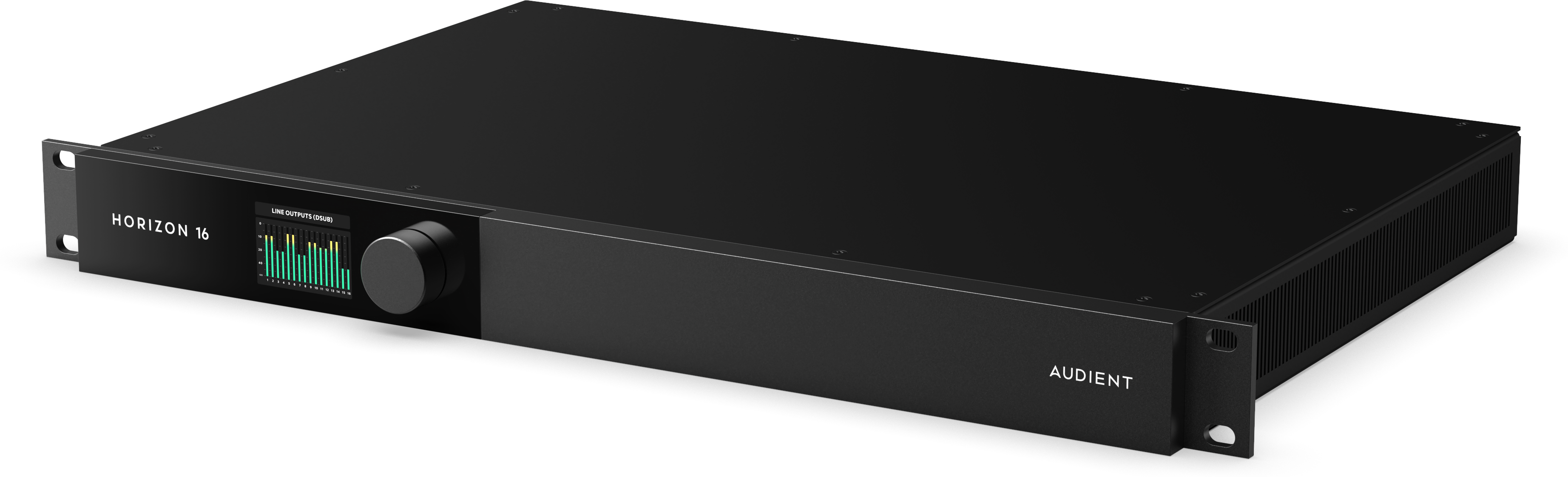
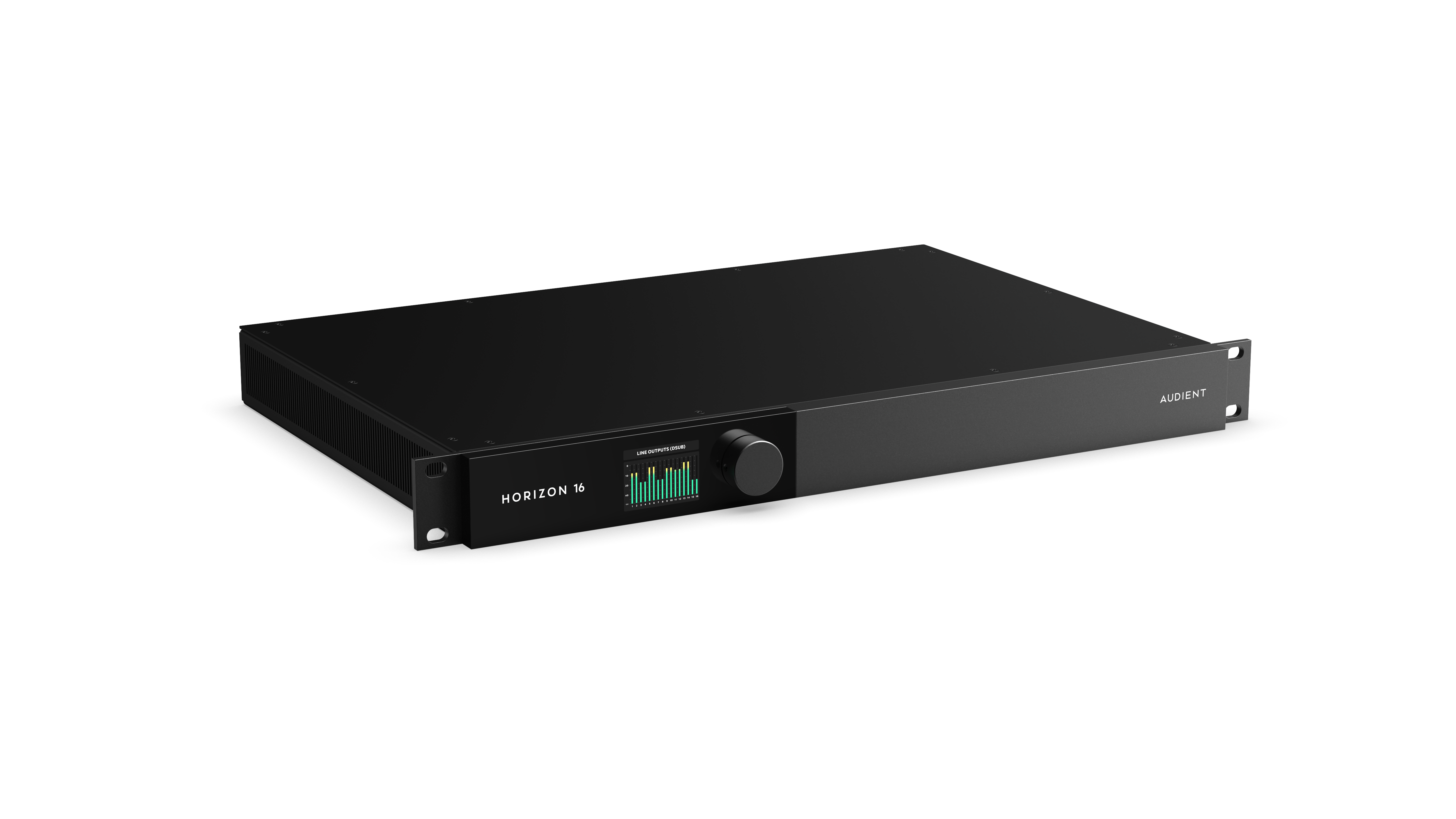
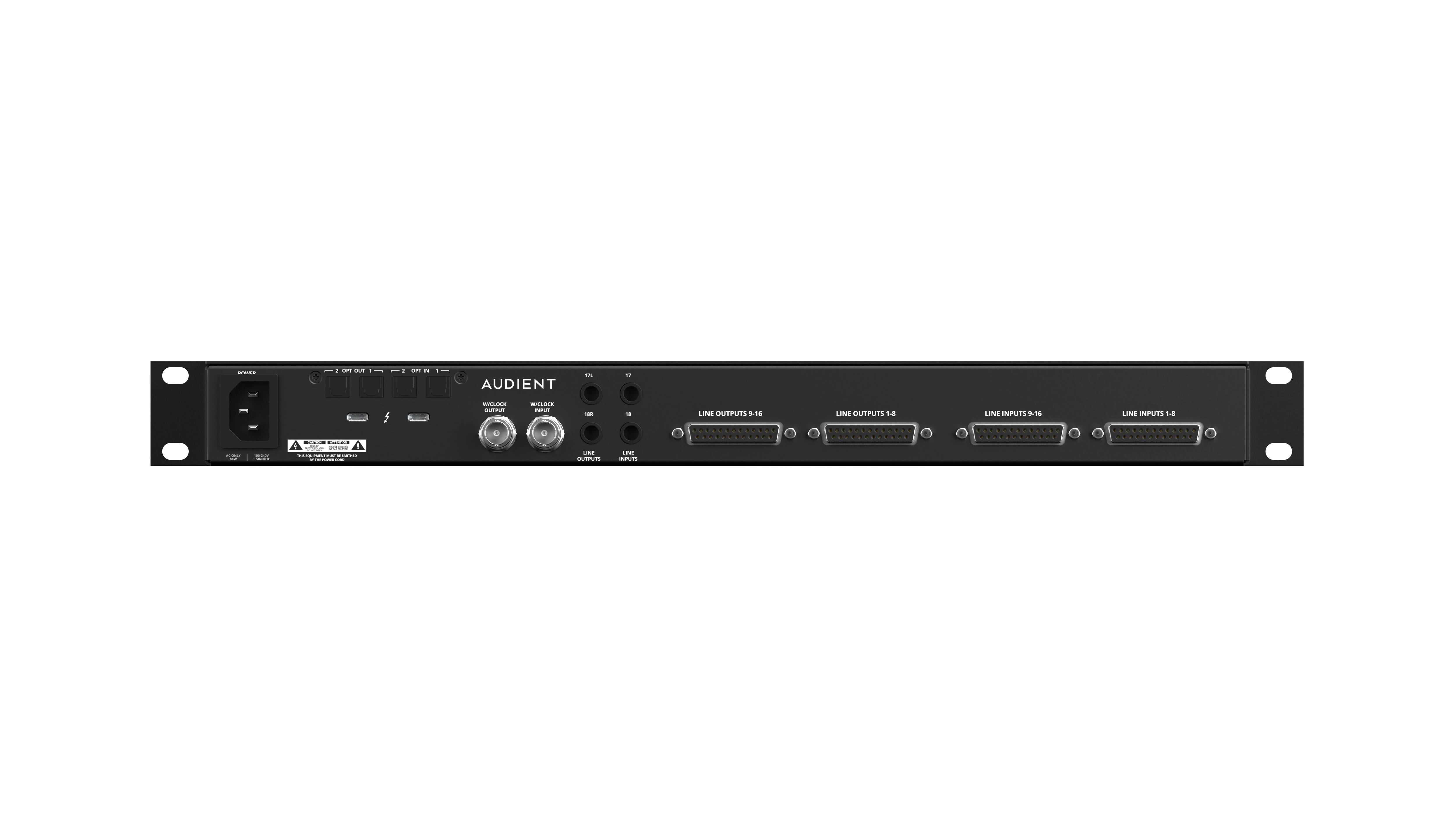
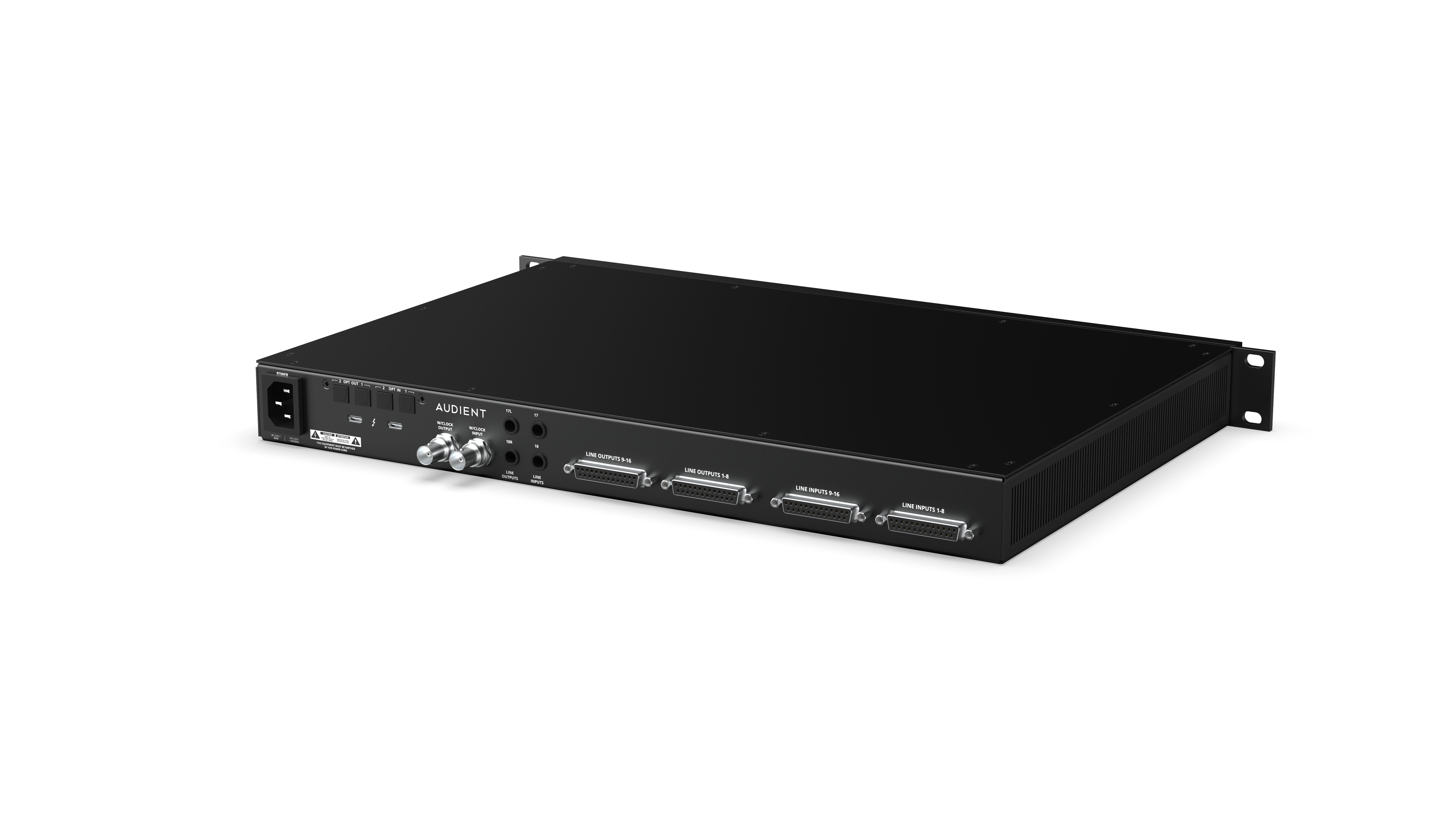
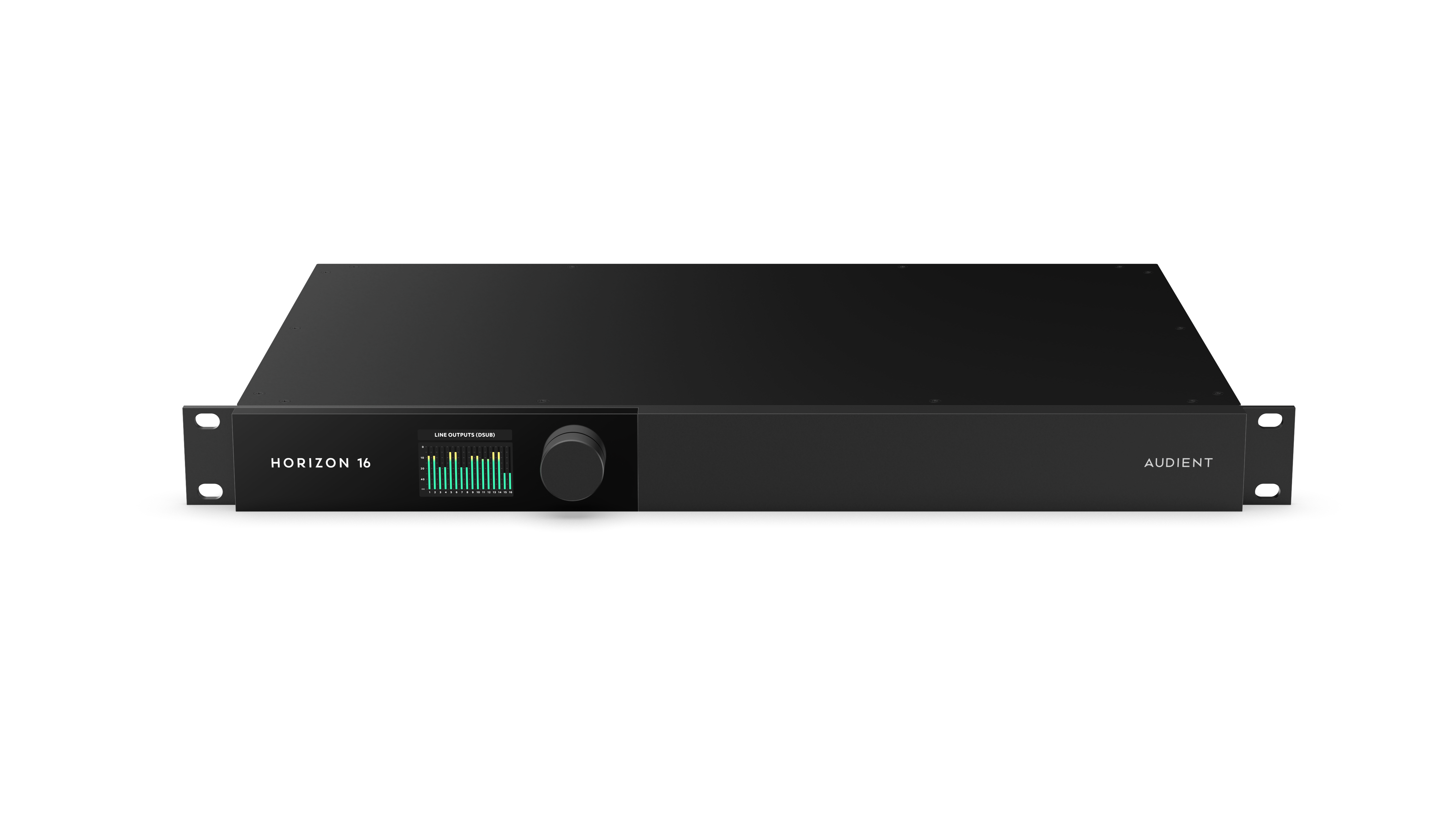
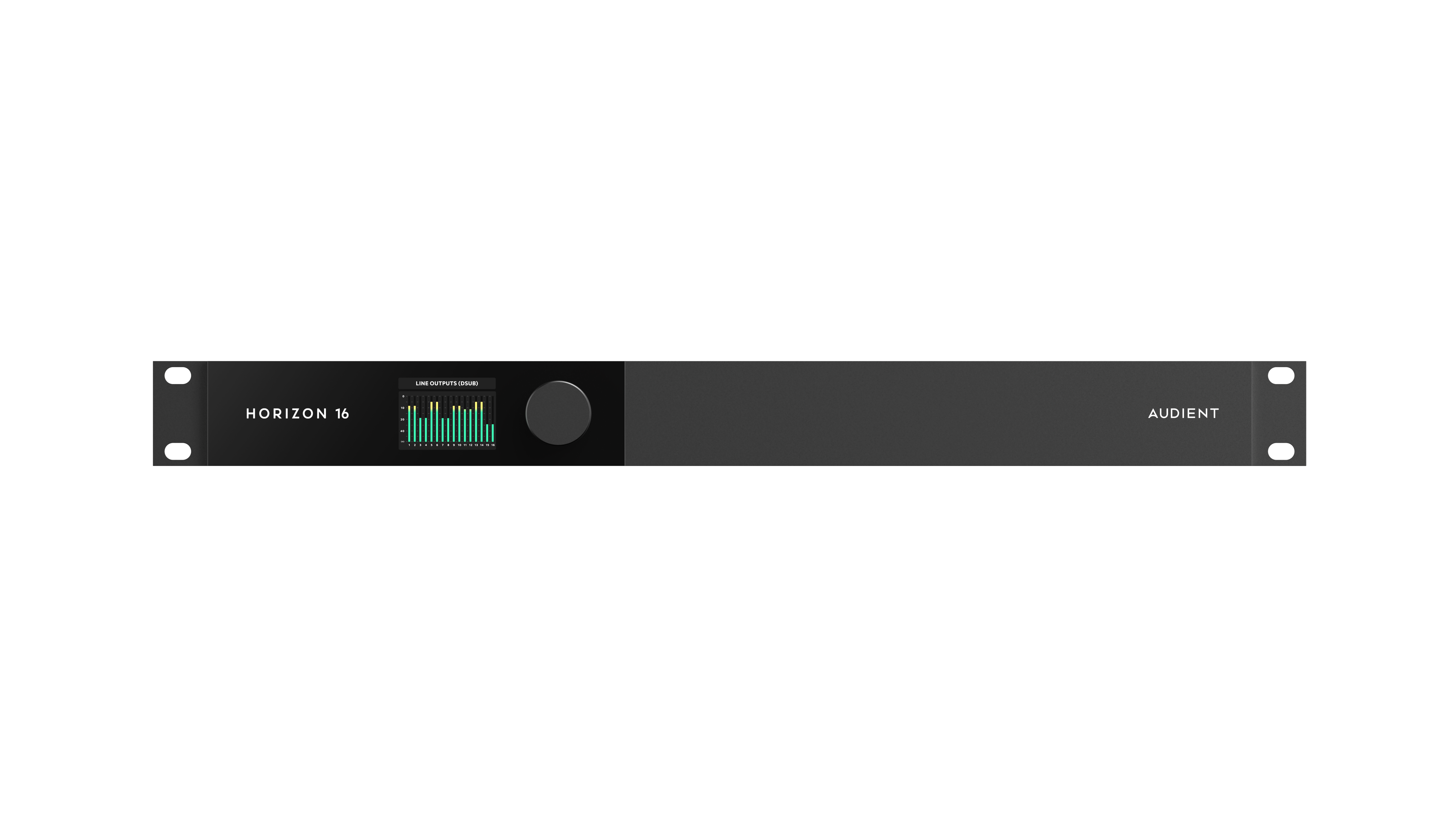
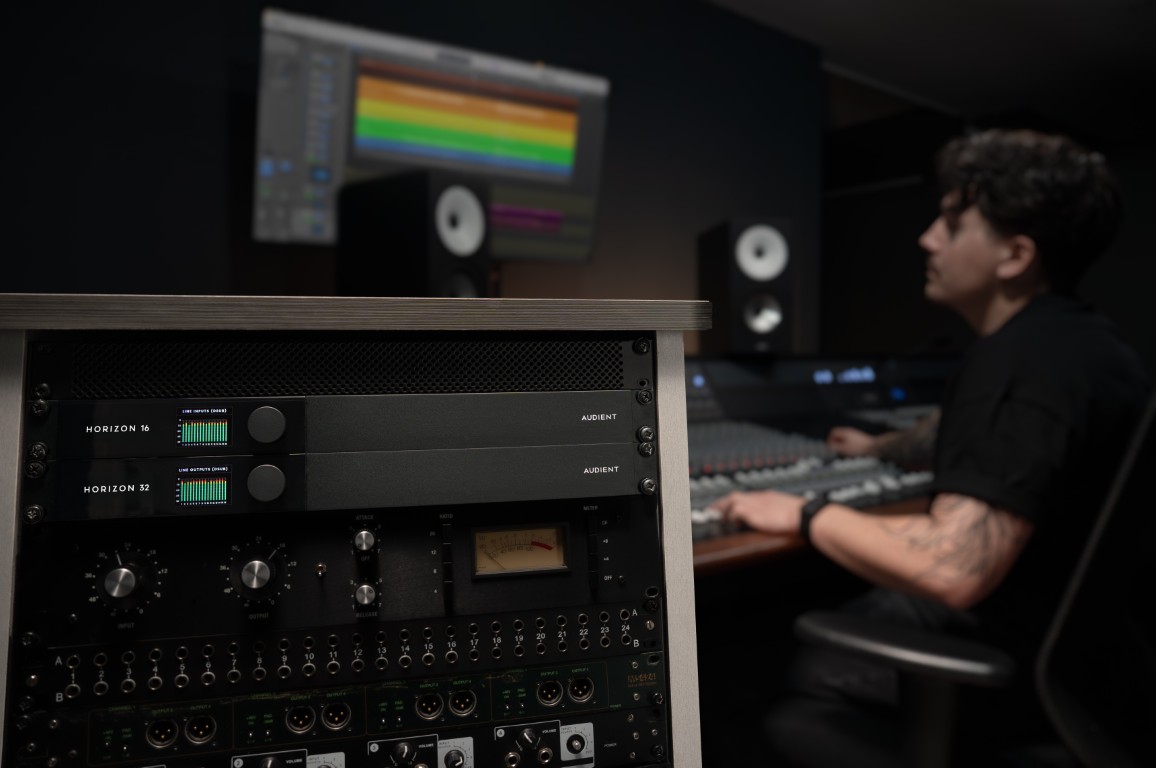
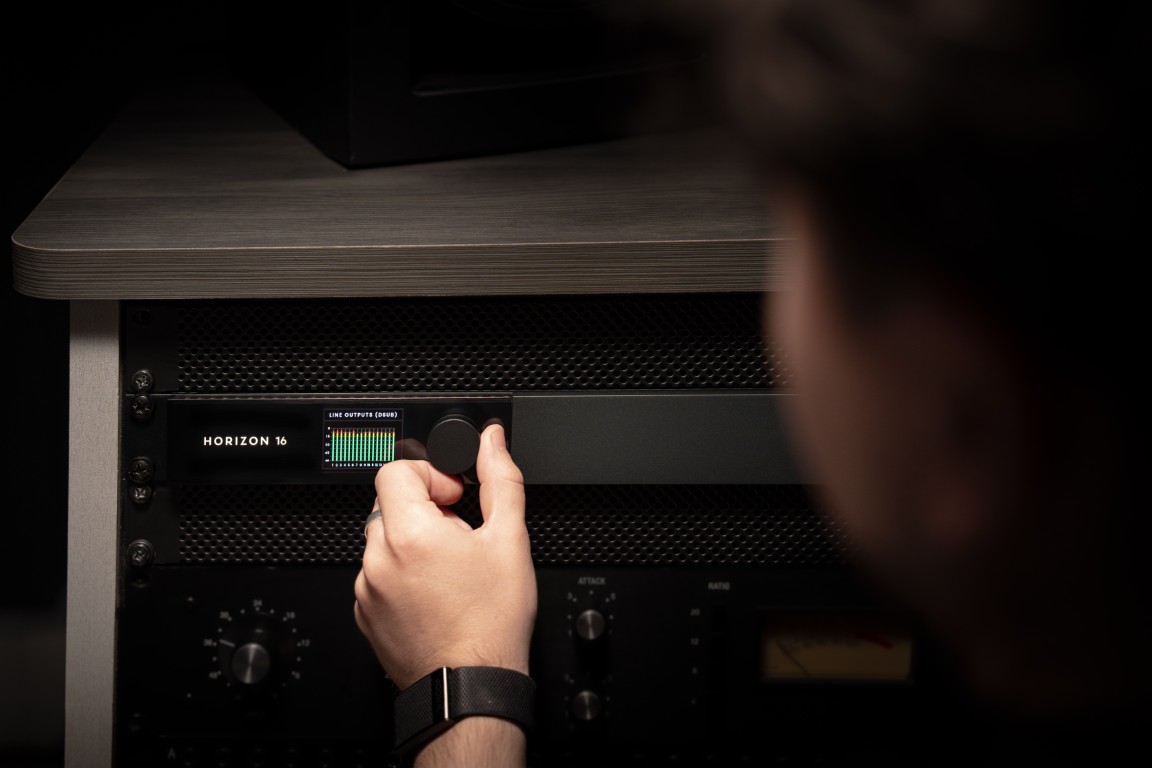
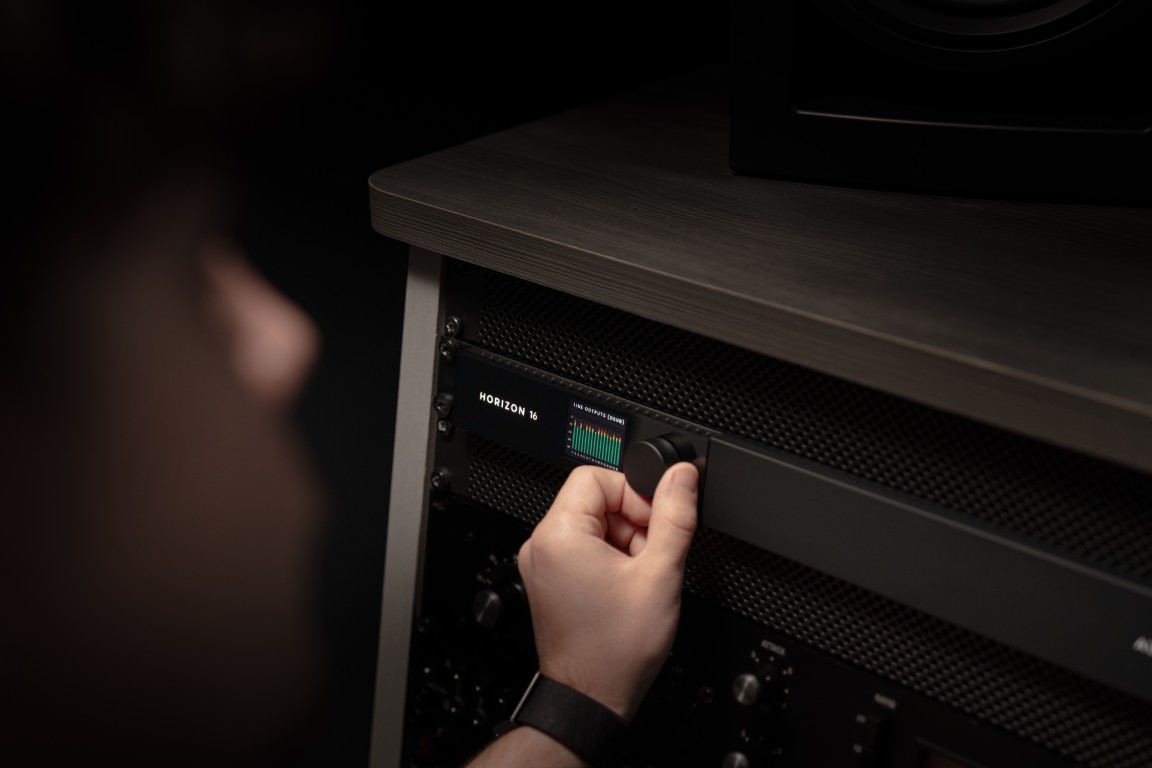
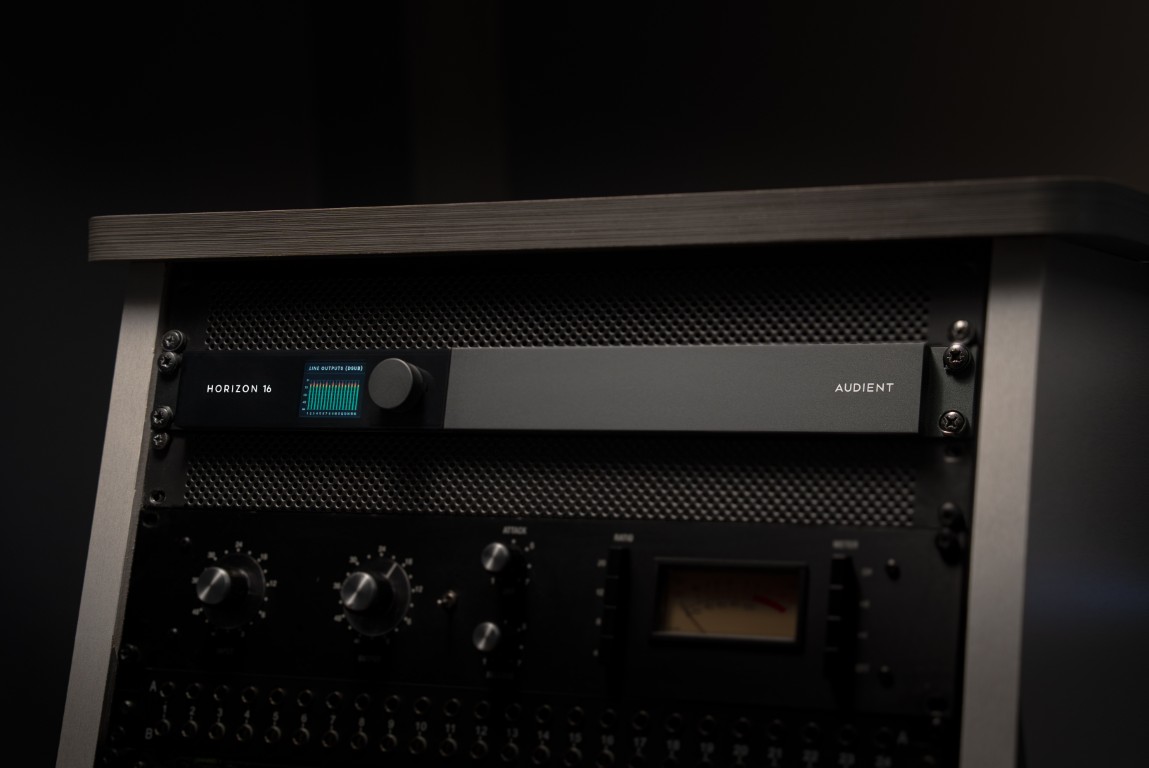
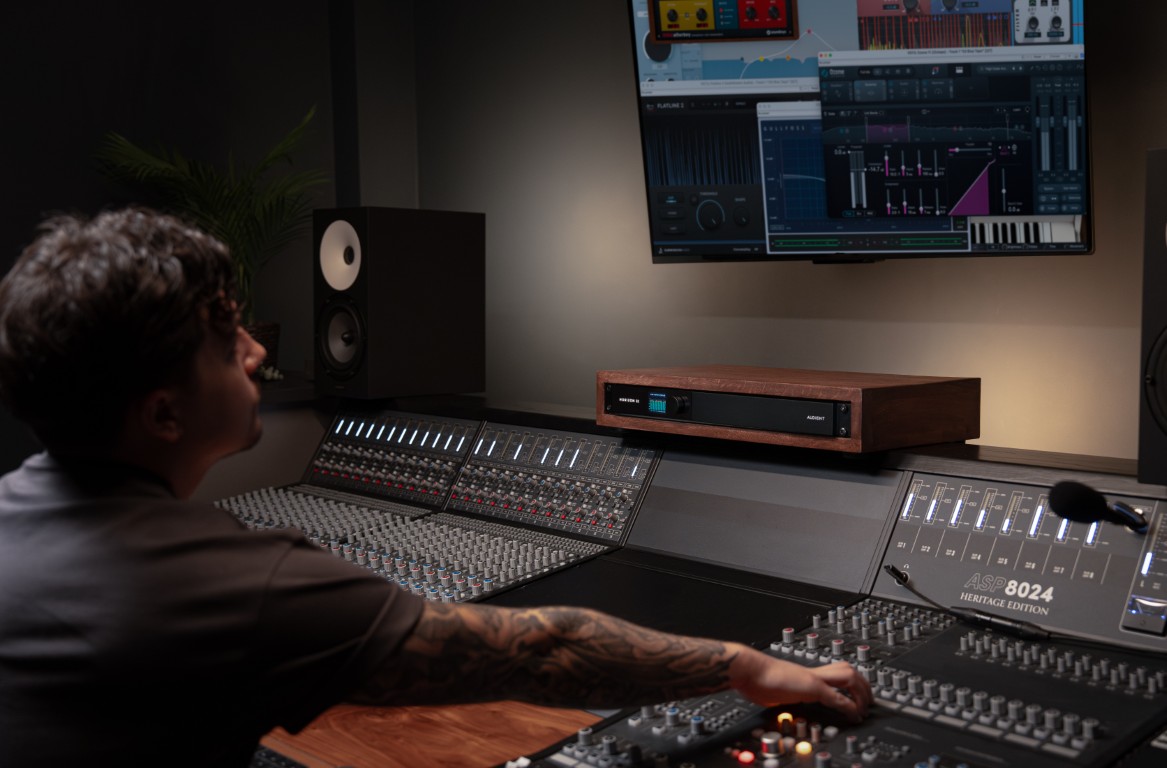
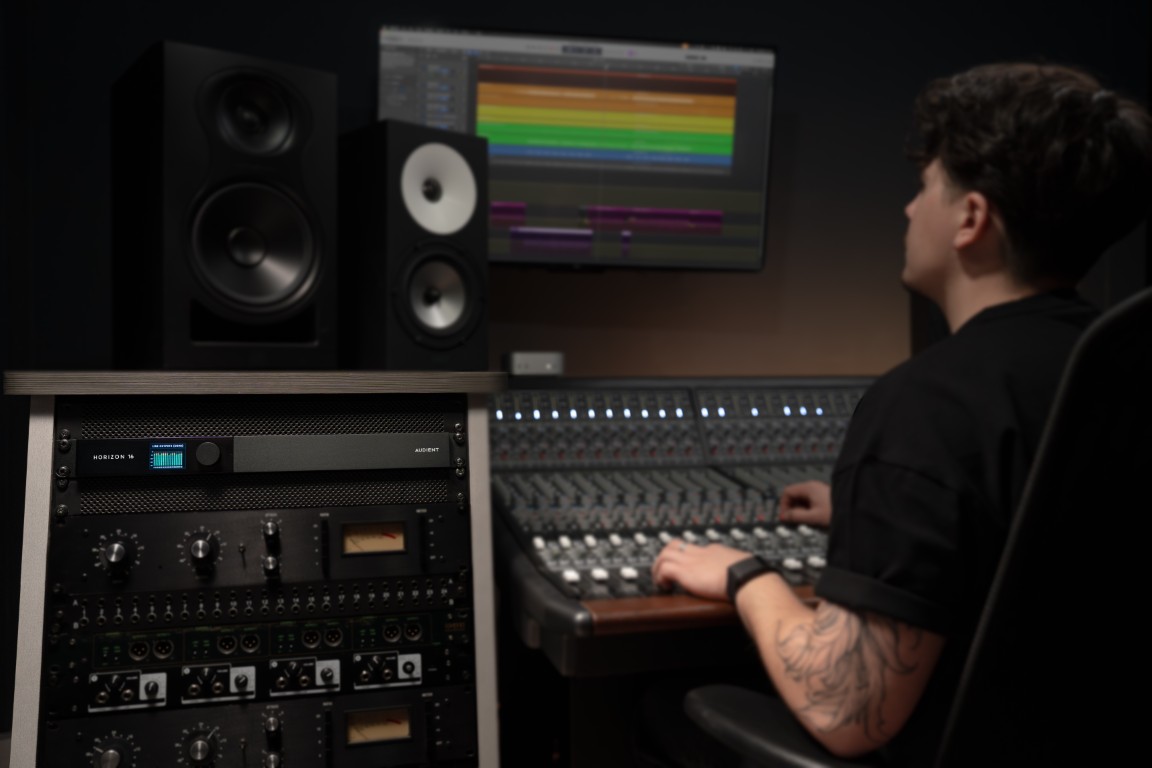
The Audient Horizon 16 is a Thunderbolt 3 audio interface designed for both advanced home studios and professional studios that work with multiple external analog devices. Its 16 line inputs and 16 line outputs via DB25 make it easy to permanently integrate compressors, equalizers, external preamps, or summing systems without having to rewire for every session.
Key Features
- 16 line inputs and 16 line outputs via four DB25 connectors for integrating a rack of outboard gear into a hybrid workflow.
- A total of 34 inputs and 34 outputs via Thunderbolt 3.
- Dedicated stereo input to the mix bus for recording the final mix without occupying the main line inputs.
- Dual ADAT for adding up to 16 additional digital channels.
- 32-bit/192 kHz conversion with a claimed dynamic range of 133 dB.
- Horizon Control centralizes routing, monitoring, levels, and the virtual patchbay.
An interface suited for a hybrid studio
The Horizon 16 really comes into its own when multiple analog processors need to remain connected to the DAW. Its 16 input channels and 16 line output channels are distributed across four DB25 connectors. This allows you to set up a permanent connection between the interface and your compressors, equalizers, line preamps, or summing mixers, then configure the routing as needed for each session.
This architecture is particularly well-suited for a studio already equipped with external hardware. For a home studio that primarily uses a few microphones and instruments connected directly to the interface, however, it’s important to note that the Horizon 16 is primarily designed for line connections and the integration of outboard gear.
Record the final mix without sacrificing two inputs
A dedicated stereo input is reserved for the mix bus. For example, it can receive the output from a summing mixer or a stereo processing chain to record the master directly into the DAW, while keeping the 16 line inputs available for other equipment.
The stereo monitor outputs also have their own dedicated path. This ensures that the main monitoring system remains independent of the outputs used to send signals to external processing devices.
Working with Low-Latency Native Plug-Ins
The Horizon 16 operates up to 32-bit / 192 kHz and offers a dynamic range of 133 dB. Audient specifies a round-trip latency that can go as low as 0.99 ms at 192 kHz with a 64-sample buffer.
This value corresponds to a specific configuration and therefore does not represent a guaranteed latency in all sessions. Actual latency depends, among other factors, on the sample rate, buffer size, computer, and project workload.
Expanding Your Studio with ADAT
The dual ADAT connectors add up to 16 digital channels. They can be used to integrate compatible converters or preamps when a project requires more inputs and outputs than the main analog connections can provide.
BNC Word Clock inputs and outputs are also provided to synchronize the Horizon 16 with other digital devices in the studio.
Centralize Routing with Horizon Control
The Horizon Control software combines routing, monitoring, and level metering into a single interface. Its virtual patchbay eliminates the need to rely solely on a physical patch to modify signal paths between the DAW and the various outputs.
The software also includes a comfort reverb for monitoring, as well as control functions such as Mono, polarity reversal, Dim, and reference level management.
Scaling Up a Larger Setup
Multiple interfaces from the Horizon lineup can be combined into a single system. Audient supports daisy-chaining up to four units with a single driver, with a maximum advertised configuration of 200 inputs and 200 outputs when the system uses the models with the highest channel count.
This capability is particularly appealing to studios that need to gradually expand their converter setup or interface a mixing console with multiple racks of outboard gear. For a more modest setup, a single Horizon 16 already provides 16 analog line channels in each direction, in addition to its dedicated connections and digital expansion.
Lire la suite
Technical sheet
- DSP Yes
- Type
- Type: Professional Thunderbolt 3 Audio Interface
- Inputs / Outputs
- Inputs/Outputs: 34 inputs / 34 outputs
- Analog line inputs: 16
- Analog line outputs: 16
- Main analog connectors: 4 DB25 connectors
- Conversion
- Conversion: 32-bit / 192 kHz
- Dynamic range: 133 dB
- Round-trip latency: 0.99 ms at 192 kHz, 64-sample buffer
- Digital expansion
- Digital expansion: dual ADAT input/output, up to 16 channels
- Mix bus
- Mix bus: dedicated stereo inputs for recording the final mix
- Monitoring
- Monitoring: Dedicated stereo outputs
- Monitoring functions: Mono, polarity reversal, Dim, and reference level
- Reference levels: +18 dBu / +24 dBu
- Synchronization
- Synchronization: Word Clock inputs/outputs via BNC
- Included software
- Included software: Horizon Control
- Horizon Control features: routing / virtual patchbay, customizable monitoring, comfort reverb, and level metering
- System Expansion
- System expansion: up to 4 Horizon interfaces on a single driver
- Maximum configuration: up to 200 inputs / 200 outputs
- Format
- Form factor: 19" rack, 1U
- Chassis: metal
- Compatibility: macOS, up to 192 kHz
More specifications
Fewer specifications
Often purchased with Audio Interface
-

SHURE
SM58 LCE
115.00 € -
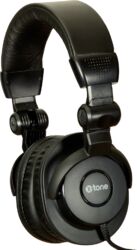
X-TONE
X-HP1
49.00 € -
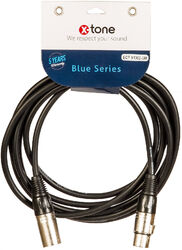
X-TONE
X1002-3M XLR (M) / XLR (F)
10.00 € -
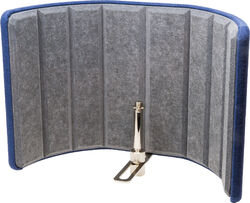
X-TONE
x screen l
169.00 € -
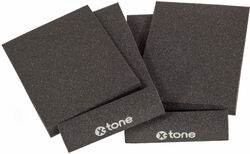
X-TONE
xi 7000 Foam Panele For Studio Speakers
15.00 € -
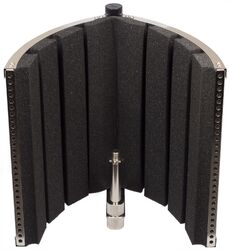
X-TONE
X-Screen
69.00 € -
sale
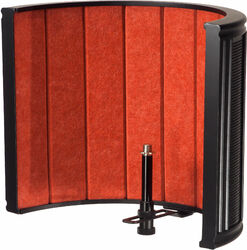
X-TONE
X-Screen Pro
199.00 € -
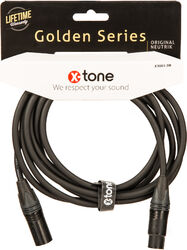
X-TONE
X3001-3M - XLR(M) / XLR(F) Golden Series
35.00 € -

X-TONE
X-HP2
79.00 € -
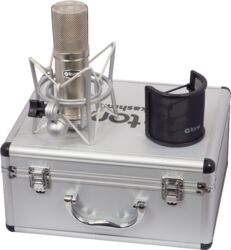
X-TONE
Kashmir
199.00 € -
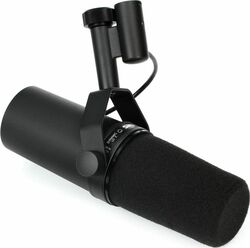
SHURE
SM7B
398.00 € -
X-TONE
xh 6001 Telescopic Microphone Stand
34.90 €