Cart
The brand Catalinbread
Learn more about the Catalinbread brand and discover the entire catalog.

Guitar and bass effects shopping guide
How to find the processor(s) that correspond to your needs and expectations amongst the hundreds of references currently available?
Contact an expert
Our musician and enthusiast tele-consultants are here to answer all your questions.
Overdrive, distortion & fuzz effect pedal
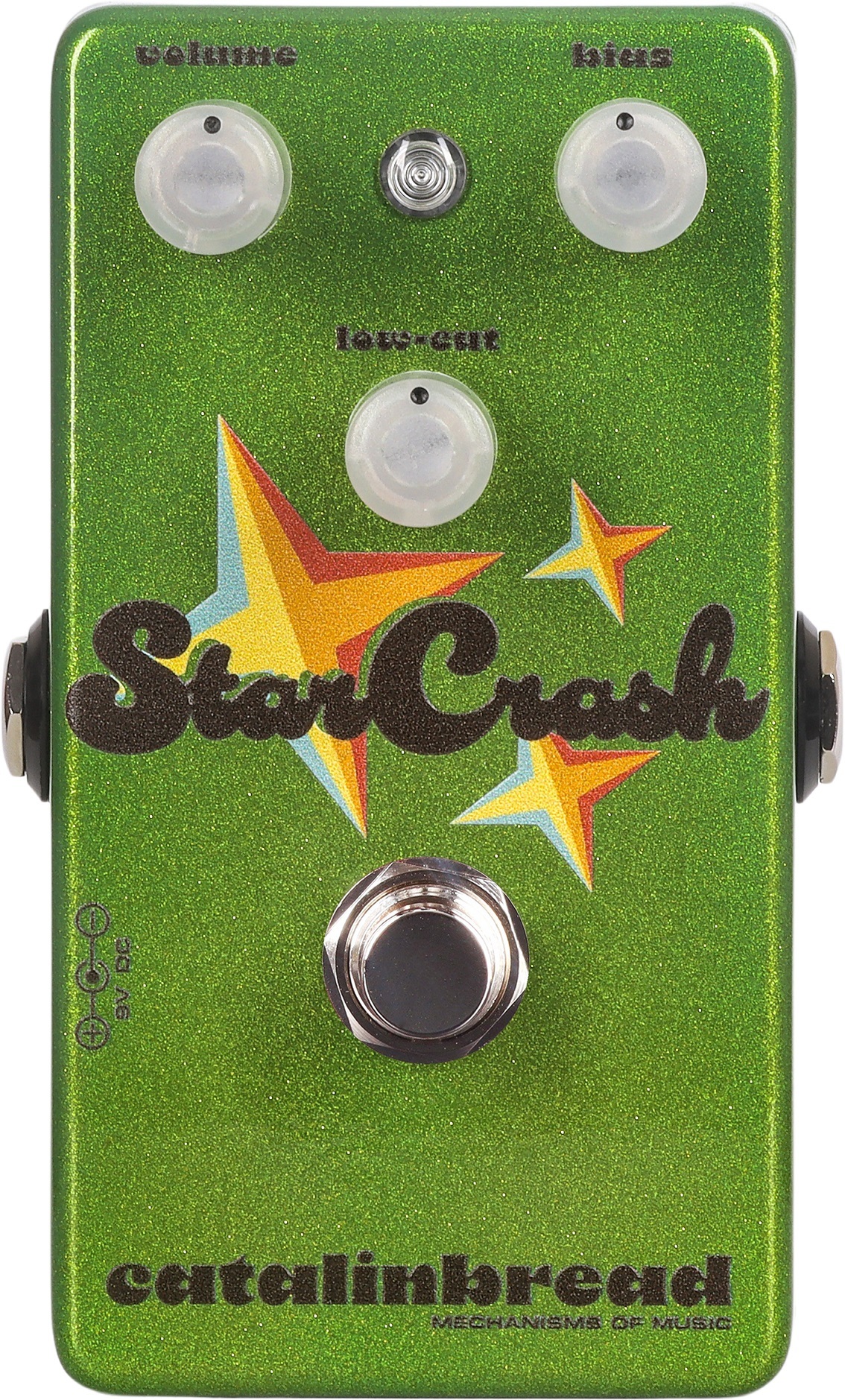
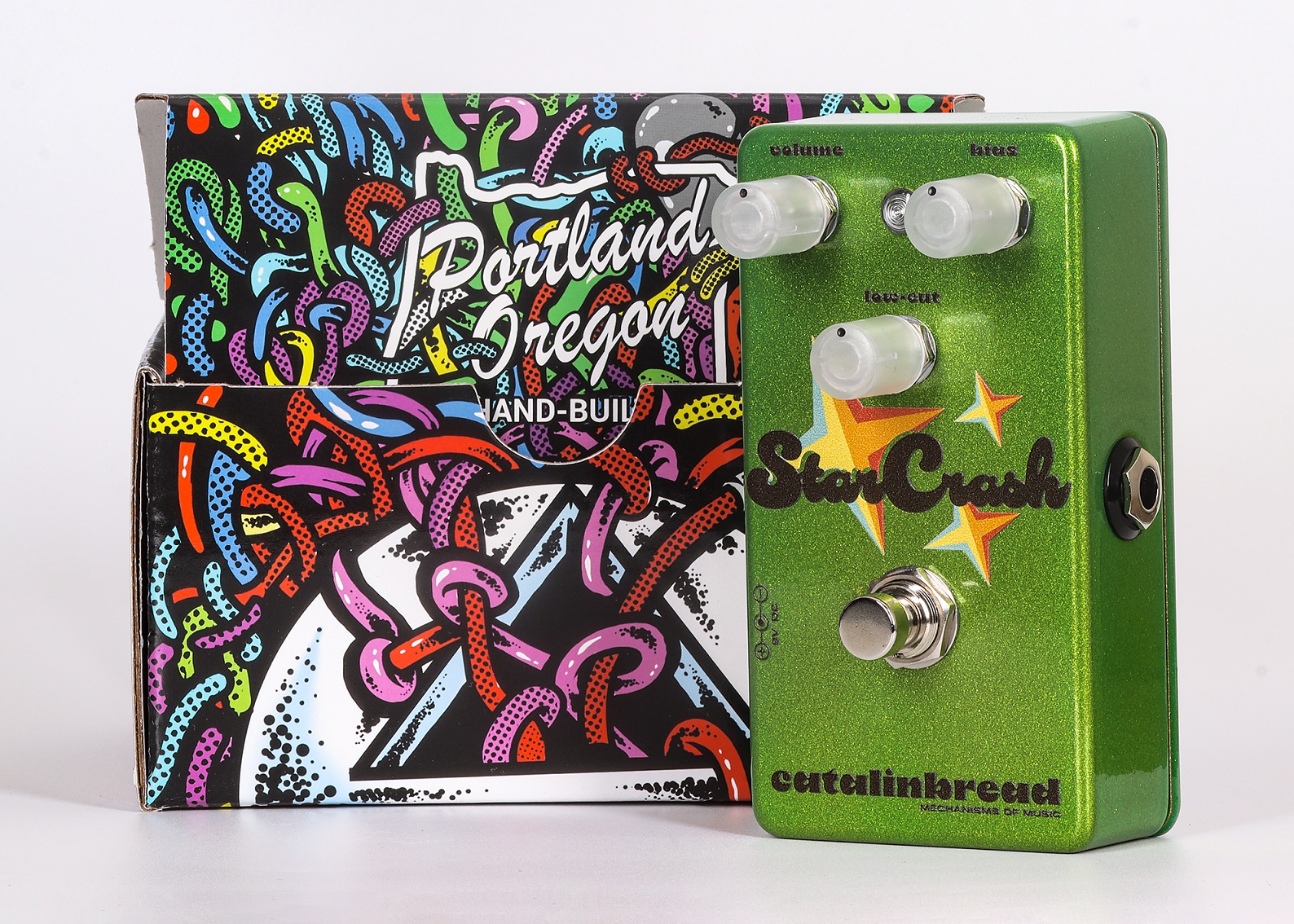
The Fuzz Face debuted in 1966 as a germanium fuzz, then switched to silicon in the '70s for reasons of circuit stability, but it has hardly adapted to this change of semiconductor. For this reason, the StarCrash is the '70s fuzz you wish they'd made in the first place. First of all, Catalinbread got rid of the Fuzz setting, which 95% of musicians didn't use, while the rest used their guitar's volume instead. Next, the Bias setting allows you to under-voltage the second transistor, allowing you to adjust your texture from powerful raw to tighter, harmonically rich sound. The Low-Cut setting cuts low frequencies from 30 Hz to 500 Hz. While the Bias and Filter settings reduce volume, Catalinbread has compensated by giving the StarCrash a little more volume than the typical "Face" circuit, allowing you to push your amp whatever your settings.
Lire la suite
Technical sheet
- for electric guitar Yes
- Fuzz Yes
- Settings: Volume, Low-Cut (High-pass filter that cuts at 30 Hz down to 500 Hz with 3 dB per octave, this setting is particularly noticeable above noon), Bias (Modifies the character of the fuzz, from distortion to velcro fuzz, the center position being the normal Fuzz Face bias)